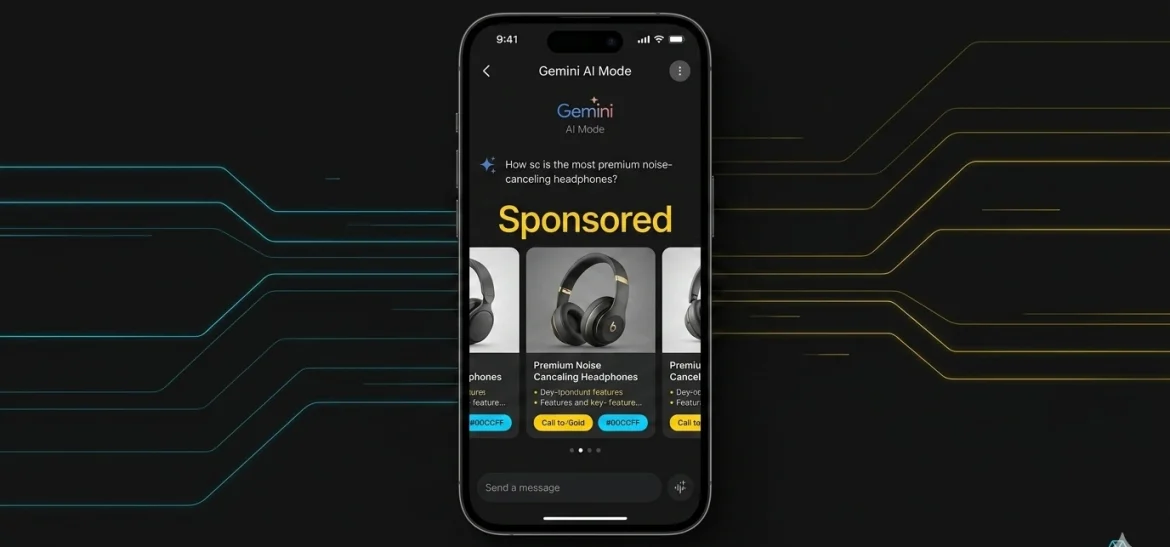
If you have opened your phone to search for something recently, you have likely noticed a massive shift. You no longer just get an immediate list of websites. Instead, a colorful box appears at the top of the screen, writing a customized, comprehensive answer to your question in real-time. This is Google’s new AI Search ecosystem, driven by Gemini and the rollout of Search Generative Experience (SGE).
For the average consumer, it feels like magic. For the average business owner running paid traffic, it feels like an absolute nightmare. Traditional top-of-page text ads are being pushed further down the screen, and the click-through rates that brands relied on for years are experiencing sharp declines. The standard playbooks for bidding on exact keywords are no longer enough to guarantee visibility.
But behind the scenes, elite growth teams aren’t panicking; they are capitalizing on this shift. The game hasn’t ended, the rules have simply evolved. If you know exactly how the AI compiles its recommendations, you can position your brand right inside the AI response block itself. Read on as we pull back the curtain to reveal the precise strategies a top-tier ads agency uses to crack the code of Google’s new AI search environment and protect your return on ad spend.
Here’s What You’ll Learn in This Guide:
- The AI Search Blueprint: How Google’s conversational AI Mode prioritizes and displays sponsored products.
- The Content-to-Ad Loop: Why structured information is the secret weapon for getting recommended by Gemini.
- Advanced Ad Placements: How to target “Highlighted Answers” and “Native Conversational Injections.”
- The AdsGrip Solution: How we keep your business ahead of platform updates to maximize profit margins.
Understanding the Mechanics of Google’s AI Search Layer
To win in this new landscape, you have to stop thinking of Google as an index of keywords and start thinking of it as a contextual matching engine. When a user queries Google’s AI interface, the algorithm performs three steps simultaneously: it synthesizes broad web data, establishes user intent, and packages a structured recommendation list.
This creates a brand new territory for advertisers known as “AI Overviews.” Sponsored placements no longer sit cleanly outside the content; they are being dynamically woven straight into the AI’s conversational summary.
When you partner with progressive performance marketing companies, the focus shifts to optimizing your entire digital footprint for semantic relevance. The AI engine needs to trust your brand’s data fully before it risks recommending your product or service to a user. This means your text assets, landing page structures, and product data feeds must speak the exact language of conversational AI reasoning models.
Why It Matters in Today’s Digital Landscape (The Death of Legacy PPC)
The shift toward AI-assisted discovery is accelerating rapidly, completely changing how consumers find businesses online:
- Data from recent web search monitoring shows that over 65% of informational queries now trigger an AI Overview block on mobile devices, capturing the primary attention of the shopper.
- Industry tracking from major digital marketing firms reveals that brands relying strictly on old-school, standard match keywords have seen an increase in their average cost-per-click (CPC) alongside a drop in conversion quality.
- According to recent HubSpot consumer tracking updates, buyers are rapidly adopting natural, long-tail conversational sentences when interacting with search interfaces, abandoning short 2-word search terms.
If your advertising framework is still managed by an outdated agency that hasn’t altered its strategy to account for multi-modal AI targeting, your brand is effectively becoming invisible. This reality is why leading enterprises are moving away from traditional setups and shifting to an advanced, tech-forward digital marketing company in jaipur to safeguard their media investments.
Inside Secrets: How Top Agencies Dominate AI Search
Cracking the AI search engine requires moving past basic bidding strategies. Here is the operational blueprint an elite team uses to win the highest-value placements:
Secret 1: Securing the “Highlighted Answers” Position
When Google’s AI compiles an answer to a highly commercial query, it includes specific cited sources and product carousels. To land your brand in these premium “Sponsored Highlighted Answers,” your landing pages must be optimized using custom Q&A content frameworks. We reverse-engineer your target audience’s deepest pain points, transforming your product pages into direct, authoritative answers that Google’s AI model can seamlessly pull and display.
Secret 2: Maximizing Conversational Discovery Ads
Google’s new conversational paths allow users to ask follow-up questions within the same search session. An expert agency sets up broad, intent-based campaign loops that capture these mid-funnel interactions. As the consumer refines their query (e.g., changing from “best running shoes” to “which of these are best for flat feet with high arch support?”), our dynamically adjusting ad structures serve the exact product variant that matches their specific criteria.
Secret 3: Deep Technical Schema Deployment
The AI engine does not guess; it relies heavily on verified data structures. We implement advanced JSON-LD semantic schema across your entire digital presence. By feeding the search crawlers clean, unmistakable structural data regarding your product capabilities, pricing accuracy, shipping times, and geographical availability, we make it incredibly easy for the AI to pick your brand over an unorganized competitor.
Secret 4: Unifying Search and Social Video Asset Feeds
Google’s Demand Gen and AI layouts rely heavily on multi-modal assets, integrating short-form video content directly into search responses. We don’t let your video content stay locked on social media. We feed your best creator-led assets straight into your search ad groups, enabling the AI engine to present engaging video demonstrations to shoppers right when they are evaluating options.
AI’s Real Role in Driving Media Efficiency
Let’s look at this honestly: AI inside an ad account is a powerful tool, not an automatic replacement for human strategy. Relying completely on fully automated platform settings without strict human oversight is a fast way to blow through your ad budget on broad, irrelevant traffic.
The true sweet spot is a balanced partnership between human expertise and automated technology. At AdsGrip, we let platform AI models handle high-speed automated bidding variations and algorithmic audience matching. Meanwhile, our human strategists take total control over the creative narrative, psychological positioning, and rigorous competitor analysis. This dual approach ensures your automated campaigns remain strictly aligned with your actual business profit margins.
Common Mistakes Businesses Make in the AI Search Era
- Mistake: Using Vague, Short-Form Landing Pages. Thin content pages don’t give the AI engine enough structured context to evaluate your business value.
- The Guidance: Build comprehensive, informative landing pages that answer deep user inquiries and display verified, first-party reviews.
- Mistake: Treating Paid Search and SEO as Independent Silos. Running separate Google Ads and organic strategies prevent your data from building on itself.
- The Guidance: Work with unified digital marketing services where your paid search insights immediately inform your organic content strategy, creating a strong presence across all search surfaces.
- Mistake: Hiring an Agency That Only Reports on Vanity Metrics. Agencies that look only at total impressions while ignoring where those clicks actually landed on the page hide real ad inefficiencies.
- The Guidance: Insist on working with an agency that reports transparently on real metrics like cost per acquisition (CPA), conversion rates within AI modules, and net return on ad spend.
Results, Timelines & Strategic ROI Expectations
Transitioning your marketing framework to succeed in an AI-dominated search landscape is an ongoing optimization process, not an instant switch.
- Days 1–30 (The Infrastructure & Schema Audit): This phase focuses entirely on data alignment. Your partner will rebuild your semantic tracking, deploy advanced page schema, and restructure your Google Merchant Center feeds. The goal here is establishing deep data clarity for search crawlers.
- Days 31–60 (The Conversational Launch Window): Next-gen ad formats and tailored Q&A landing pages go live. You will typically see a stabilization in your cost-per-click and a noticeable improvement in the quality of your incoming leads.
- Days 61–90 and Beyond (The Scale & Dominate Window): With clean historical data established, the campaigns can scale efficiently. Your brand begins appearing consistently inside conversational recommendations, leading to an optimized customer acquisition cost compared to standard legacy search setups.
Why Choose AdsGrip? Your Future-Proof Growth Partner
Navigating major platform updates requires an execution partner who looks past basic metrics and treats your capital with genuine respect. AdsGrip stands out because we look past basic metrics to focus entirely on your business’s net profitability.
Our team brings together certified expertise across advanced search mechanics, data tracking architecture, and full-funnel content distribution. We don’t offer cookie-cutter, generic marketing templates. We look deeply at your unique industry landscape, audit your technological foundation, and build customized performance frameworks designed to scale your brand effectively.
Whether you are an established regional brand seeking a sophisticated digital marketing agency in jaipur or a growing national enterprise looking to compete alongside the best marketing companies in india, we supply the technical skills and creative execution needed to turn platform updates into your biggest unfair advantage.
Frequently Asked Questions (FAQ)
Q1: Will Google’s new AI Search overviews make my standard text ads completely useless?
They won’t make them useless, but they change where they appear and how they work. Standard standalone text ads are losing their premium real estate, meaning advertisers must learn to optimize their campaigns so their text and product formats get pulled directly into the AI overview conversation.
Q2: How does a local business optimize for Google’s conversational AI search?
Local brands must ensure their local listing profiles are completely optimized and match the conversational attribute schema on their websites. When local buyers ask Gemini for deep recommendations nearby, the engine pulls data from local feeds, rewarding businesses that have clean, structured regional data.
Q3: What are Conversational Attributes in Google Merchant Center?
Conversational Attributes are rich, detailed metadata fields that go far beyond basic product titles. They include descriptive information about use cases, product compatibility, specific material details, and target audiences, allowing the AI engine to match your products to highly detailed long-tail searches.
Q4: Should we reduce our paid search budget until the AI updates settle down?
Pulling back completely just gives your competitors an easy path to capture your market share. The smartest move is shifting your budget away from broad, generic keyword matching and reallocating those resources into structured performance formats, smart asset groups, and deep first-party data tracking.
Q5: How can we tell if our current agency is actually ready for the AI search transition?
Ask them to walk you through your current impression share on AI search surfaces and explain their plan for optimizing your landing pages for semantic search algorithms. If their response is vague or relies on outdated optimization tactics, it’s a clear sign your business needs a more forward-thinking partner.
Conclusion: Step Into the Future of Digital Commerce
The search landscape is changing fast, and it isn’t waiting for businesses to catch up. Continuing to rely on outdated digital marketing playbooks while the world’s biggest search platforms transition to conversational, AI-driven architectures is a clear path to losing market relevance. The future belongs entirely to brand leaders who adapt quickly, embrace clean technical structures, and demand measurable performance data.
Don’t let platform changes hurt your business growth. Ready to secure your brand’s presence in Google’s new AI Search ecosystem?
Connect with the strategic team at AdsGrip today to arrange your deep-dive digital account audit.