Post
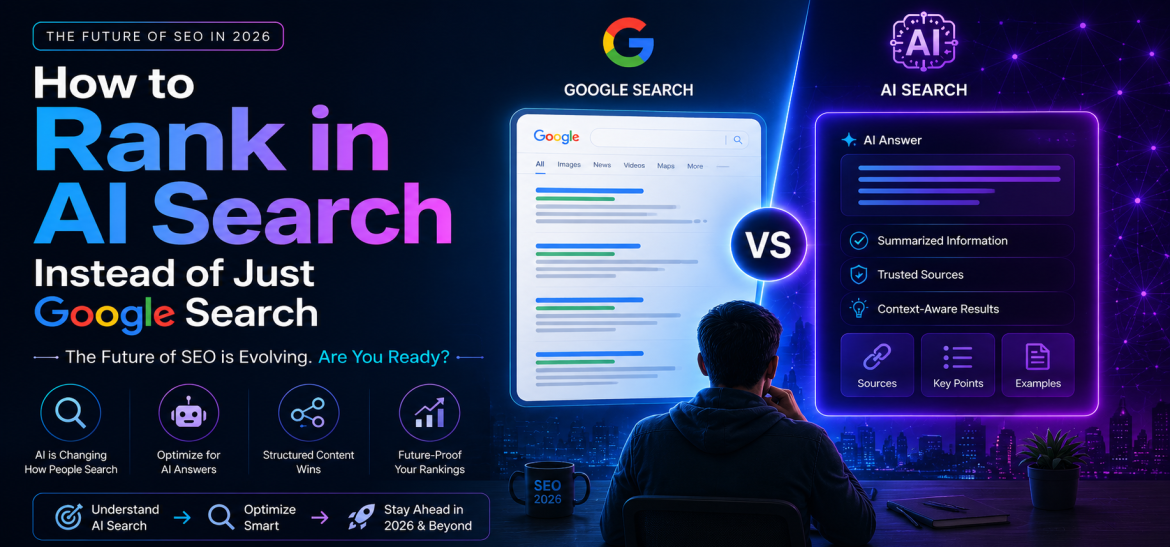
How to Rank in AI Search Instead of Just Google Search: The Future of SEO in 2026
For years, businesses focused on one goal: ranking on Google’s first page. Keywords, backlinks, technical SEO, and content optimization were the foundation of online visibility.
But search behavior is changing.
Today, users are not only typing queries into Google and clicking blue links. They are asking questions directly to AI-powered search platforms like Google AI Overviews, ChatGPT, Gemini, and Perplexity. These platforms provide summarized answers, recommendations, and solutions by selecting information from trusted online sources.
This means the future of search is no longer just about ranking on Google. It is about becoming a trusted source that AI systems choose to mention.
This new approach is known as AI Search Optimization, Answer Engine Optimization (AEO), and Generative Engine Optimization (GEO).
Businesses that adapt early will have a major advantage in gaining visibility, traffic, and customer trust.
Businesses need a complete digital marketing services in jaipur strategy that combines SEO, content, and AI-focused optimization to stay visible across modern search platforms.
What Is AI Search Optimization?
Traditional SEO focuses on helping search engines understand and rank webpages.
AI Search Optimization focuses on making your content understandable, trustworthy, and useful for AI systems that generate answers.
When someone asks:
“Which is the best digital marketing agency for small businesses?”
An AI search engine does not simply show ten websites. Instead, it analyzes multiple sources and creates a direct answer.
The websites that get mentioned are usually those with:
- Strong topical authority
- Clear and structured information
- Original insights
- Trustworthy expertise
- Well-optimized content
Google itself has stated that AI-powered search experiences continue to rely on strong SEO fundamentals, including helpful and people-first content.
Why Ranking on Google Alone Is No Longer Enough
Google remains important, but search is becoming more conversational.
A user might previously search:
“SEO company Jaipur”
Now they may ask:
“What should I look for before hiring an SEO company in Jaipur?”
The second query requires deeper understanding. AI systems look for content that answers questions, explains concepts, compares options, and provides real value.
A website ranking at position #1 on Google may not always become the preferred AI answer.
AI search looks beyond rankings and evaluates:
- Does this content answer the user’s actual problem?
- Is the information reliable?
- Does the author demonstrate expertise?
- Can the AI easily understand and extract useful information?
The goal has shifted from ranking pages to earning recommendation status.
While AI search is changing user behavior, strong SEO services in Jaipur remain the foundation for improving website authority, rankings, and long-term organic visibility.
How to Optimize Your Website for AI Search
1. Create Content That Answers Real Questions
AI engines are designed to answer questions.
Your content should match how people naturally ask things.
Instead of creating an article only around:
“Digital Marketing Services”
Create content around:
- What digital marketing services does a business need?
- How much does digital marketing cost?
- Which marketing strategy works best for startups?
Question-based content increases your chances of appearing in AI-generated answers.
For example, AdsGrip regularly publishes educational marketing content covering topics like SEO strategies, AI tools, and digital growth techniques. These types of resources help build topical authority.
2. Build Topical Authority Instead of Publishing Random Blogs
AI systems prefer websites that demonstrate expertise in a specific area.
A website with 50 detailed articles about digital marketing will usually have stronger authority than a website with unrelated content.
Create content clusters around your services:
SEO Cluster
- SEO basics
- Local SEO strategies
- Technical SEO guides
- SEO mistakes businesses should avoid
Paid Advertising Cluster
- Google Ads strategies
- Meta Ads optimization
- PPC campaign management
AI Marketing Cluster
- AI tools for marketers
- AI content optimization
- Future of search marketing
Internal linking between these articles helps search engines and AI systems understand your expertise.
You can explore AdsGrip’s digital marketing solutions and related resources to see how service pages and educational content can support authority building.
Creating valuable, informative content through a strong content marketing strategy helps brands build expertise and become trusted sources for both users and AI systems.
3. Make Your Content Easy for AI to Understand
AI systems process information differently from traditional search engines.
Your content should have:
Clear Headings
Use questions as headings:
- What is AI Search Optimization?
- How does GEO work?
- Why does AEO matter?
Short Answer Sections
Provide direct answers near the beginning of sections.
Example:
What is GEO?
Generative Engine Optimization (GEO) is the process of optimizing content so AI-powered search engines can understand, reference, and recommend it in generated answers.
Structured Information
Use:
- Lists
- Tables
- FAQs
- Step-by-step explanations
This makes your content easier for both humans and machines to interpret.
4. Focus on E-E-A-T Signals
Google and AI systems increasingly value experience and credibility.
E-E-A-T stands for:
- Experience
- Expertise
- Authoritativeness
- Trustworthiness
Improve these signals by:
- Adding author information
- Sharing case studies
- Including real examples
- Demonstrating industry experience
- Updating outdated content
For businesses, showing real results matters more than simply publishing generic information.
5. Optimize for Answer Engine Optimization (AEO)
AEO focuses on getting your content selected as an answer.
To improve AEO performance:
Add FAQ Sections
Answer common customer questions.
Example:
Q: How long does SEO take to show results?
A: SEO results depend on competition, website quality, content strategy, and technical improvements. Most businesses begin seeing measurable improvements after consistent optimization over several months.
Use Natural Language
People ask AI tools complete questions, not just keywords.
Write for conversations, not keyword density.
6. Improve Your Brand Visibility Across the Web
AI engines do not evaluate your website alone.
They consider your overall digital presence.
Build authority through:
- Industry mentions
- Guest contributions
- Reviews
- Social media activity
- Business profiles
- Quality backlinks
The stronger your online reputation, the higher the chance AI systems recognize your brand as trustworthy.
A strong online presence supported by social media marketing services in Jaipur can improve brand recognition, trust signals, and overall digital visibility.
7. Keep Traditional SEO Strong
AI Search does not replace SEO.
It builds on it.
Important SEO foundations still include:
- Fast website speed
- Mobile-friendly design
- Proper internal linking
- Optimized metadata
- Crawlable pages
- High-quality backlinks
Google’s guidance for AI search features recommends continuing proven SEO practices rather than looking for shortcuts.
SEO vs AI Search Optimization: What Is the Difference?
| Traditional SEO | AI Search Optimization |
|---|---|
| Focuses on rankings | Focuses on being referenced |
| Targets keywords | Targets user questions |
| Optimizes pages | Builds knowledge authority |
| Measures clicks | Measures visibility and mentions |
| Search engine focused | Human + AI focused |
The smartest strategy is not choosing between SEO and AI optimization.
It is combining both.
Read More: GEO vs SEO: What’s the Difference and Why It Matters in 2026
The Future of Search Belongs to Trusted Brands
The next generation of search will reward businesses that provide genuine expertise.
Companies that only chase keywords may lose visibility.
Companies that create valuable resources, answer customer questions, and build authority will become the sources AI systems trust.
The future of SEO is not disappearing. It is evolving.
The question is no longer:
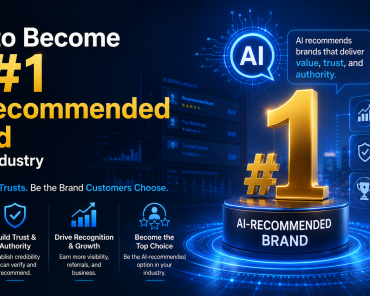
“How do I rank #1 on Google?”
The better question is:
“How do I become the brand AI recommends?”
Businesses that start preparing today will have a stronger advantage in tomorrow’s search ecosystem.
Read more: How to Get Your Business Recommended by ChatGPT, Gemini & Claude
Final Thoughts
AI search is kinda changing the way customers find businesses online. Sure, ranking in Google is still valuable, but real visibility now tends to need a broader plan mixing SEO, AEO, and GEO together, not only chasing one lane.
When you publish content that’s actually useful, grow your site’s authority, tighten the website structure, and keep building trust with people, your business can remain discoverable on both traditional search engines and those newer AI-powered platforms too.
If you’re looking to boost your online presence a bit more, take a look at AdsGrip’s digital marketing solutions, their SEO services, and also the AI-focused marketing resources—so you can shape a search strategy that’s ready for what’s next.
Frequently Asked Questions (FAQs)
1. What is AI Search Optimization and why is it important?
AI Search Optimization is basically the process of crafting and improving content, so AI-powered search engines like Google AI Overviews, ChatGPT, Gemini, and Perplexity can actually understand it, assess it, and then hand out suggestions for your website information. This matters a ton, because people are using those AI-generated answers more often these days, and not just quietly scrolling through the standard search results like before, either.
2. How can businesses optimize their website for AI search results?
To optimize for AI search, companies should put out content that is actually helpful, unique, and sort of arranged so it matches the real questions people ask. In practice, it helps to push harder on E-E-A-T signals, grow real topical credibility (not just claim it), use straightforward headings, toss in a small set of FAQs, and then apply structured data. And yeah, you still want to keep the old school “classic SEO” habits in place; otherwise, the foundation gets a bit wobbly.
3. What is the difference between SEO, AEO, and GEO?
SEO is mostly about getting higher visibility and better rankings in those more traditional search engines. AEO (Answer Engine Optimization) kind of leans into the idea that your content should be usable for direct answers, like for search queries, featured snippets, and even voice-based searches. Meanwhile, GEO (Generative Engine Optimization) is more about helping what you publish become a solid citation, meaning it can be referenced by AI-powered search tools when they generate responses, then make their recommendations.
4. Does ranking on Google guarantee visibility in AI-generated search results?
Not always. Even if you manage to rank on Google, it doesn’t mean you will automatically appear inside those AI-generated answers, or whatever you want to call them. Those AI platforms peek at more than just rankings too, like how relevant the content is, the expertise level, and the overall authority trust factor, whether it lines up with the user intent, and if the info is easy to extract and then translate by the AI system in the background.
5. What type of content performs best in AI search and Generative Engine Optimization (GEO)?
Content that performs well in AI search usually provides clear answers, expert insights, original information, and practical solutions. Detailed guides, comparison articles, FAQs, case studies, and question-based content help AI systems understand the topic and increase the chances of being included in generated responses.